
1. Home
  2. Guides
  3. Deep tissue vs Swedish

Choosing your pressure

Deep tissue vs Swedish massage: one is a line on the list, the other is what you ask for.

Deep tissue means slower, firmer work into the layer beneath the surface muscle.

Swedish means longer gliding strokes across it.

Both happen on the same table, from the same therapist, with the same oil — and here they cost the same at 60, 90 and 120 minutes.

So the choice isn't about how tough you are.

It's about what you want the hour to do.

Open
Mon — Thu 9:30 AM — 9:00 PM · Fri — Sun 9:30 AM — 9:30 PM
Address
8338 E 21st St, Suite #311, Wichita, KS 67206
Parking
Free surface parking in the plaza lot, right outside the door.
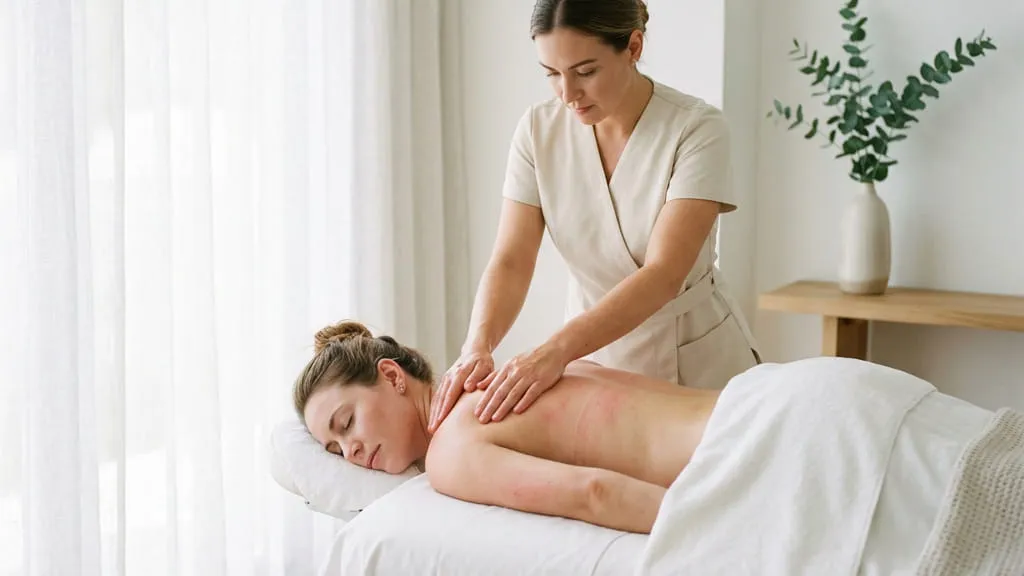
A therapist working with slow, braced pressure into the muscle across a guest's shoulder blade

The short answer

Deep tissue massage is slow, braced pressure worked into the layer under the surface muscle; Swedish massage is lighter, gliding work across it.

At Crystal Massage in Wichita, deep tissue is its own 60-minute line at $70, and Swedish is what you ask for when you book the same 60 minutes of body massage.

Identical at 60, 90 and 120 minutes; 0 depth upcharge; 6 styles named

Written by the Crystal Massage team in Wichita, Kansas, from what guests actually ask at the desk. This is general wellness education, not medical advice.

The short version

Deep tissue and Swedish are two settings on one dial, not two different rooms.

The room doesn't change between them, and neither does the table, the oil or the person giving the massage. What changes is how fast the hands move and how much weight goes behind them. Swedish covers ground — long strokes, a steady rhythm, the whole back in one pass. Deep tissue slows down and stays put, working into the layer underneath instead of gliding over it.

That's the whole mechanical difference, and it's smaller than the marketing around it suggests. A therapist working deep does much the same thing more slowly, with a braced forearm where a flat palm would have been, and stops the moment you say stop.

So the booking matters less than people expect. You can move the pressure at any point in the hour, which means a session that opens as broad Swedish work can go deeper on one shoulder and stay light everywhere else. What you pick at the desk sets where the hour starts, not where it has to end.

What depth means

Slower hands, more body weight behind them, and far less ground covered.

Deep tissue is a speed before it's a force. The therapist slows to a crawl, sinks in as the tissue allows, then waits — often on an area no bigger than a playing card — instead of sweeping the length of the back. Forearms and elbows do a lot of the work, because a forearm can hold steady pressure for a full minute without the hand giving out underneath it.

Because it stays in one place, it suits a specific complaint more than a general ache: one side of the neck, the band along a shoulder blade, the outside of a hip that eight hours in a desk chair has left stiff. NCCIH's plain-language overview of massage therapy files all of this under one heading and is careful about what it claims, which is about the right caution to bring to a booking.

What it is not

Deep tissue isn't permission to hurt you, and it isn't a competition. A therapist who can't be talked down from a pressure is doing the job wrong. It's also not a sports massage or a trigger-point protocol — those are structured plans built around an assessment, and an hour on this table isn't one of them.

Where it stops

Depth reaches muscle. It doesn't reach a disc, a nerve root or a joint capsule, and no amount of pressure changes what's happening inside any of them. Anything sharp, electrical or radiating down a limb is a question for a doctor, and the answer is never more weight through a forearm.

Pressure is a setting you control, not a grade you earn, and soreness is not the receipt.

The Swedish half

The stroke most people picture is broad, continuous and deliberately unremarkable.

Swedish is the picture in your head when someone says massage: long gliding strokes with oil, kneading, a rhythm that doesn't stop to argue with anything. Pressure can sit anywhere from feather-light to genuinely firm. It's built for coverage and continuity — back, legs, arms, neck, in an order that repeats often enough that you stop tracking it.

You won't find Swedish anywhere on the price list, and that catches people out. It's painted on the storefront window out front and named in the studio's own welcome note, and it's still not a line you book. It's how you ask for an hour to be worked. Say the word at the desk when you book body massage, and say it again on the table if the first ten minutes aren't what you meant.

Of the six styles named on that window, two carry lines of their own: deep tissue, and couple massage. Swedish, hot stone and chair work don't, because the list is organised by the clock, not by technique. Foot reflexology sits in between — the bookable line is called Foot Massage. the trade association's position statement on massage and wellness describes the whole family in terms of general well-being rather than as a catalogue of separate treatments, which is close to how a therapist thinks about it.

  • Broad coverage — the whole back, then the legs and arms, instead of twenty minutes spent on one shoulder.
  • A rhythm you stop noticing — repetition is the mechanism, not filler between the interesting bits.
  • Oil and long strokes — the hands keep moving, which is what makes an hour feel continuous.
  • Pressure you set — light through firm, changed by saying so, at any point in the 60, 90 or 120 minutes.
  • No line of its own to book — ask for it when you book body massage; the menu shows the four lengths it comes in.
A lighter, gliding Swedish stroke drawn with a flat open palm along the upper back and shoulder
Swedish work is broad and continuous — long strokes that keep moving instead of settling on one knot.

The pressure myth

Harder is not better, and next-day soreness is not the receipt.

The most common mistake in this room is treating pressure as a grade. People ask for deep tissue because it sounds like the serious option, then spend an hour holding their breath and clenching against it. A muscle under a body that's bracing doesn't soften — it defends. The therapist ends up working against you, and that wastes the hour and the money both.

Here's the scale that works: pressure should sit where you'd call it strong, and where you can still breathe normally and hold a conversation. If your shoulders lift, your jaw sets, or you catch yourself counting the strokes until they end, it's gone past useful. Say something. Saying so isn't a failure of nerve — it's the one bit of information the therapist can't get any other way.

Soreness after deep work is common, and it isn't the goal. Something like the day after a hard session at the gym, easing off within a day or two, is ordinary. Sharp pain, bruising, or anything still there at the end of the week isn't — tell the front desk about it before you book again.

What the pressure should feel like, and what it is telling you
What you noticeWhat it usually meansWhat to say
You could fall asleep Light to medium — good for coverage and for settling down Nothing, unless you wanted more
Strong, and you are still breathing normally About right for deep work Nothing — this is the target
You are holding your breath Past useful; the muscle has started bracing Lighter, please
Sharp, hot or shooting Stop — this is not depth Stop, and say where
Very little is happening Too light for what you came in for Firmer, please

The money

Depth is not a surcharge here, which leaves the decision entirely about what you want.

Most menus charge extra for depth. This one doesn't — the deep tissue line and the body massage line carry the same figure at every length both are sold in. Ninety minutes of deep tissue is $100. Two hours is $140. Body massage reads exactly the same at both, and the price page carries the full table.

So there's nothing to gain by talking yourself into more pressure than you want, and nothing to save by talking yourself out of it. Book the hour you actually want, and let the pressure sort itself out on the table. It's worth checking on any other menu you compare, too, because studios commonly charge a supplement for depth.

Length is what actually moves the bill, and it changes what fits inside a session far more than depth does. Sixty minutes of deep work covers one region properly, or two if neither is complicated. Ninety covers those and still leaves time for the rest of you. The length guide works that through, and the deep tissue page answers the local booking questions.

The evidence

What the research supports, what it does not, and where it comes back empty.

Massage has been studied, mostly for pain and for tension, and the honest summary is that the findings are short-term and low-confidence. the NCCIH research digest written for clinicians is blunt about why: the trials are small, they're close to impossible to blind — you know perfectly well whether hands are on you — and the comparison groups differ so much between studies that pooling them is a judgement call, not a calculation.

For a booking, that means less than you might hope. Massage may help with relaxation and everyday muscle tension. It has been looked at for low-back and neck complaints with modest, short-lived results. It is not a treatment for any condition, it does not replace medical care, and anyone who tells you otherwise is selling something.

The misses matter as much as the hits. Reviews that went looking for lasting change months after a course of massage have generally come back with very little, and where an effect does show up it tends to be measured in days, not seasons. The NCCIH research digest lands in the same place on the literature as a whole: the evidence is limited, and what benefit it does find has not been shown to last. None of that is an argument against booking an hour. Book it for what it plainly is — an hour where nothing is asked of you.

  • Studied for — low-back pain, neck and shoulder tension, general stress.
  • Typical finding — small improvements, measured across days and weeks, not months.
  • Typical weakness — few participants, no honest placebo, comparison groups that vary between trials.
  • Deep tissue specifically — studied far less than massage in general; most of the evidence describes massage as a category, not one pressure.
  • If you have a health conditionNCCIH's safety tips for massage takes two minutes, and telling the therapist beforehand changes what they do, not whether you can come.

How to ask

One sentence at the desk decides it, and the table settles the rest.

You don't need a diagnosis to choose. Ask yourself: is there one spot that's been bothering you for more than a week, or do you mainly want an hour where nothing hurts and nobody talks to you? Yes to the first points at deep tissue. Yes to the second points at asking for Swedish work inside an hour of body massage.

If it's both — and it usually is — book the deep tissue line and name the area when you call. A therapist can spend a good part of the hour on one shoulder and work the rest of you broadly in whatever is left. It's an ordinary thing to ask for at the desk, not an awkward one.

Crystal Massage is in Wichita, on the north side of E 21st Street, about a fifth of a mile east of Rock Road; the arrival page has the suite number and the lot. Booking runs through the phone and nothing else — call (316) 246-3999, seven days a week. Ask for deep tissue or ask for Swedish; either way someone checks the pressure early, and it moves in both directions from there.

If you book deep tissue

Name the area before you lie down, not halfway through. Eat something light beforehand, drink water afterwards because you'll want it, and give the pressure an honest verdict inside the first five minutes instead of at the end. A session that starts too hard almost never fixes itself.

If you book an hour of body massage

Say the word Swedish at the desk, then say what you want the hour to do — settle you down, cover everything, stay off the neck, whatever it happens to be. You can still get firm work inside it: the body massage line is priced by the clock, not by technique, so asking for firmer on one spot doesn't turn your booking into something else.

At a glance

The numbers.

Shortest deep tissue line
60 minutes — deep tissue is sold in 60, 90 or 120 minutes, with no half-hour option
Body massage lengths
30, 60, 90 or 120 minutes — 4 lengths, priced by the clock, not by technique
Price gap between the two
Zero at all 3 shared lengths — 60, 90 and 120 minutes read the same
Swedish on the price list
0 separate lines — it is how you ask for an hour of body massage
Styles named on the storefront
6 — Swedish, deep tissue, hot stone, foot reflexology, couple and chair
Changing the pressure
Any minute of the 60, 90 or 120 — lighter or firmer is not a complaint
Open
7 days — 9:30 AM to 9 PM Monday to Thursday, to 9:30 PM Friday to Sunday
Where
8338 E 21st St, Suite #311, Wichita, KS 67206
To book
(316) 246-3999 — the phone is the whole booking system

Who books it

Best for.

  • Anyone with one specific area — a shoulder blade, one side of the neck, an outer hip — that's been complaining for longer than a week.
  • People who've had a light massage before and walked out thinking not much had happened.
  • Guests who want an hour of broad, continuous work and would rather not be asked to breathe through anything.
  • Anyone comparing menus who wants to know whether depth is being charged as an upgrade — at 60, 90 and 120 minutes here, it isn't.
  • First-timers who can't decide: book 60 minutes of body massage, ask for firm, and you've settled the question without committing to anything.

Worth knowing before you book

Give the pressure a verdict in the first few minutes. Lighter and firmer are both ordinary requests, and neither one is a complaint about the work.

Deep tissue starts at 60 minutes on this price list — the half-hour option is body massage, worked firmly on one area if that's what you ask for. The price page carries every length.

Mention a health condition, a recent injury, or a pregnancy before the session starts, not during it. Massage may help with relaxation and everyday muscle tension; it is not a substitute for medical care.

Calling ahead is the reliable way to get the length and the therapist you want. (316) 246-3999 reaches the front desk directly, and it's the only way to book.

Evidence-aware

Sources, and what they do not say.

Massage may help with relaxation and everyday muscle tension, and none of it replaces medical care. The references below are the plain-language health guidance this guide leans on. Where the evidence is thin or a review found nothing, they say so — and so does this page, in the same paragraph as the finding rather than in a footnote.

FAQ

Still wondering.

What is the actual difference between deep tissue and Swedish massage?

+

Speed and depth, on the same table with the same oil. Swedish is broad, gliding work at a steady rhythm that covers the whole body. Deep tissue slows right down and stays on a small area, using forearms and elbows to reach the layer under the surface muscle. You can move the pressure in either one, so what you pick sets where the hour starts, not where it has to end.

Does deep tissue massage cost more than a regular massage?

+

Not here. Deep tissue and body massage carry the same figure at 60, 90 and 120 minutes, which are the three lengths both lines are sold in. Studios commonly charge a supplement for depth; this price list does not, so the decision comes down to what you want from the hour, not what you want to spend. The full table sits on the massage prices page.

Can I book a Swedish massage, or is deep tissue the only option?

+

You can have Swedish work by asking for it. Swedish is painted on the storefront window and named in the studio's own welcome note, but it is not a separate line on the price list. Book an hour of body massage and tell the front desk, or the therapist, that Swedish is what you want. The list is organised by length, not by technique, and deep tissue is the one style with a line of its own.

Is deep tissue massage supposed to hurt?

+

No. Strong is the target; painful is not. A useful test is whether you can breathe normally and still hold a conversation. If you're holding your breath or clenching, the pressure has gone past useful and the muscle starts defending instead of softening, so say lighter, please. Soreness for a day or two afterwards is common. Sharp pain, bruising, or anything still there a week later is not, and it's worth raising before the next booking.

Do I need an appointment?

+

Calling ahead is the reliable way to get the time you want, and it is the only way to hold the couples room, which is one room with two tables. There is no online booking — (316) 246-3999 reaches the front desk directly. Crystal Massage is open seven days: 9:30 AM to 9 PM Monday through Thursday, and to 9:30 PM Friday, Saturday and Sunday.

Is massage a replacement for medical care?

+

No. Massage may help with relaxation and everyday muscle tension, but it neither diagnoses nor treats a medical condition. If you have a health condition, a recent injury, severe or persistent pain, or you are pregnant, check with a medical professional first and tell your therapist before the session starts.

Where do I park?

+

Crystal Massage is in The Shops at Tallgrass at 8338 E 21st St, Suite #311, Wichita, KS 67206, on the north side of 21st Street just east of Rock Road. Parking is the plaza's own surface lot, free, straight in off 21st, and Suite 311 opens onto it — no garage, no deck and nothing to validate.

Read enough? The table is on 21st Street, just east of Rock.

Open seven days — Mon — Thu 9:30 AM — 9:00 PM · Fri — Sun 9:30 AM — 9:30 PM. Say the length you want when you call and the desk will tell you what is free.

Crystal Massage · 8338 E 21st St, Suite #311, Wichita, KS 67206 · Open seven days · (316) 246-3999

Crystal Massage, Wichita, Kansas Page last updated Prices, hours and distances on this page are rebuilt from source on every deploy.