
1. Home
  2. Guides
  3. Reflexology vs foot massage

Choosing between them

Foot reflexology vs foot massage: two names on the window, one line you can actually book.

The storefront window says foot reflexology.

The price list says Foot Massage.

They're the same appointment here — a reclining chair, shoes and socks off, everything else left on, and 30 or 60 minutes of work across the soles, arches, heels and up into the calves.

All that separates the two words is a map, and the map is older than the evidence for it.

Open
Mon — Thu 9:30 AM — 9:00 PM · Fri — Sun 9:30 AM — 9:30 PM
Address
8338 E 21st St, Suite #311, Wichita, KS 67206
Parking
Free surface parking in the plaza lot, right outside the door.
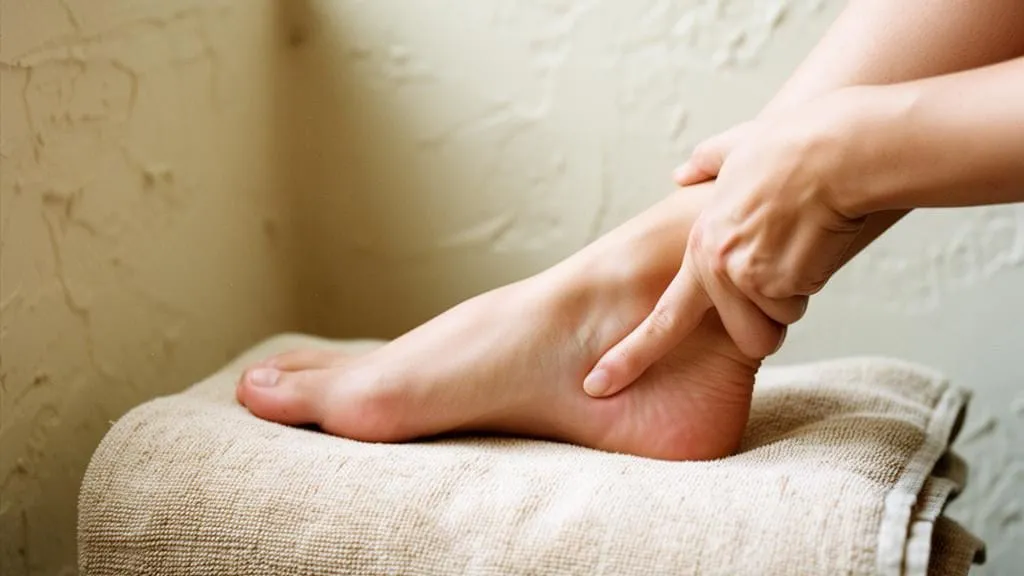
A therapist working the arch of a foot with both thumbs, a towel under the ankle

The short answer

Foot reflexology is a foot massage worked to a traditional map of zones on the sole, each zone said to correspond to a part of the body somewhere else.

Plain foot massage claims none of that.

No good evidence puts either one ahead.

At Crystal Massage in Wichita, Kansas, one bookable line covers both — 30 minutes for $25.

30 or 60 minutes, two names, one line on the price list

Written by the Crystal Massage team in Wichita, Kansas, from what guests actually ask at the desk. This is general wellness education, not medical advice.

Two names, one line

The window and the price list disagree, and the price list wins.

Foot Reflexology is painted on the storefront glass. Foot Massage is the line on the price list, at 30 or 60 minutes. There's nothing in between — one foot appointment, and either name gets you the same reclining chair and the same therapist working the same soles.

Most places sell the two words as separate products with separate price tags: a foot rub for people who want their feet to feel better, and reflexology for people who want something more. With one foot line, we can't run that argument even if we wanted to. You're buying time on the feet. The rest is vocabulary.

Use either word at the desk and you'll be understood. Your therapist can work the whole sole in a set order, or go straight to the heel that's been complaining and stay there — both sit inside the same booking. If one of those is what you came for, say so in the first minute.
The zone map

The zone map is inherited from an older tradition, not demonstrated.

Reflexology works from a chart. The sole gets divided into zones, and each zone is said to correspond to somewhere else in the body — an organ, a gland, a stretch of the spine. Press the right spot, the story goes, and something registers at the far end. The charts don't agree with each other from one tradition to the next.

The framework is old and it hangs together. It's still not a mechanism anybody has demonstrated. NCCIH's overview of traditional Chinese medicine and what is actually known about it is careful about that exact distinction: a practice can carry centuries of history and a consistent theory without research ever confirming it. Reflexology sits there, and we're not going to tell you that pressing your arch reaches your liver.

What the chart is genuinely good for

A chart gives a therapist a route. Work the sole zone by zone and the whole surface gets covered in some order, so nothing gets skipped for not being the part that complained. Whatever the zones mean, an unhurried pass over both feet is a sensible way to spend half an hour.

What it is not good for

It isn't a diagnostic tool. A tender spot on the sole is a tender spot on the sole — it doesn't report on an organ, and nobody in a massage studio can read it that way. A foot that hurts in a new, sharp or worsening way belongs with a doctor rather than a therapist.

The map is unproven. The half hour in the chair is not the thing anybody is disputing.

The honest answer

No trial this guide can point to puts one foot session ahead of the other.

Massage research is thinner than the marketing around it. NCCIH's plain-language summary of massage therapy puts it in the usual careful language: the studies tend to be small, short and awkward to blind, and the effects that show up are modest and short-lived. That caution covers every kind of hands-on work, feet included.

The zone map is where it lands hardest. Settling the argument would take one particular comparison — mapped work against unmapped work, the same feet, the same half hour, the same pressure, with only the chart changing. That study hasn't been run at a size worth quoting. Comparing a session against no session at all answers a much easier question, which is whether half an hour in a chair beats not having one, and nobody was arguing about that. So the gap sits there. It doesn't show the map is useless, and it doesn't buy anyone the right to charge extra for it either.

This cuts in both directions. A spa promising that reflexology will do specific things to specific organs has gone well past what the research supports, and charging extra for the promise only makes it worse. A missing study is no verdict against the session, though. NCCIH groups massage among the mind and body practices studied for relaxation, and short-term relaxation is all we sell a foot session on. The map is what's unproven. The half hour in the chair isn't in dispute.

  • Best supported — short-term relaxation. People report feeling calmer afterwards, and the research NCCIH summarises calls that effect modest and short-lived.
  • Plausible but thin — that it eases everyday muscle tension through the feet and calves. Low confidence, and the claim stops at the tissue under the hands.
  • Unsupported — that pressing a zone on the sole acts on an organ, a gland or a system somewhere else in the body.
  • Untested — whether mapped work beats unmapped work. No head-to-head comparison exists at a size that would settle it.
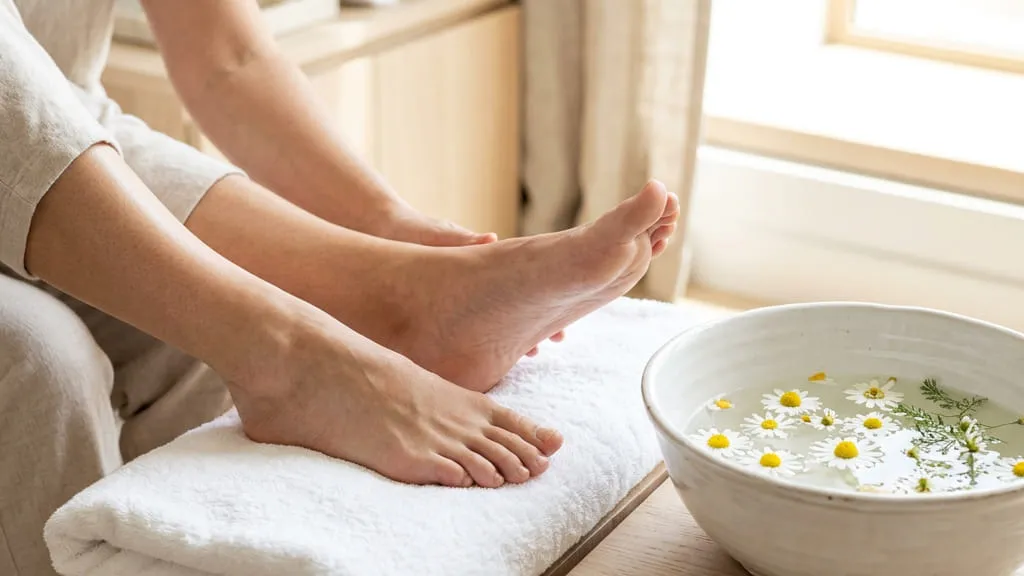
Bare feet resting on a folded towel beside a shallow bowl of water with flowers in it
A soak is the picture most people have of a foot session. The work itself happens in a reclining chair with shoes and socks off, for 30 or 60 minutes.

Side by side

The differences people expect, and how many survive contact with the menu.

Set the two names beside each other and most of the differences you'd expect fall away. The chair is the same, the lengths are the same, your clothes stay on, and it's the same pair of hands. All that really changes is the story each name tells about why those hands are where they are.

Where a real difference shows up, it's about intent, not equipment. A therapist working to the map moves in a fixed order across the whole sole. One working without it goes where the foot is stiff and stays there. Both are good ways to spend 30 minutes, and either one is yours for the asking.

Foot reflexology and foot massage, compared on the things people actually ask about
Foot reflexologyFoot massage
Where you are A reclining chair, shoes and socks off The same reclining chair, shoes and socks off
What comes off Footwear and nothing else Footwear and nothing else
Guiding idea A traditional map of zones on the sole Wherever the foot is tight, stiff or sore
Claimed reach Points said to correspond to organs and glands The feet, ankles and calves being worked
Evidence for the guiding idea Traditional, not demonstrated Never claimed in the first place
What research supports for either Short-term relaxation, modest, low confidence Short-term relaxation, modest, low confidence
On this price list Not a separate line One line, at 30 or 60 minutes

In the chair

Shoes off, everything else on, and a chair that reclines instead of a table.

The foot appointment is the least intimidating thing on the menu, which is most of why first-timers pick it. You keep your clothes on. The chair reclines instead of laying you face down, so you can see the room and talk or not, as you like. Shoes and socks come off, and that's the whole of the undressing.

Length is the only real decision you have to make. The half hour is the $25 line and it covers the feet properly — soles, arches, heels, the joints across the top. The hour is $45, and that second thirty minutes is where the calves get real attention instead of a courtesy pass. If you're on your feet all day, you'll probably want the hour next time, whatever you booked first. The rest of the menu's prices are on the price page.

If your feet are the reason you're coming but not the only reason, the two pair up — half an hour in the chair, then straight onto the table, booked as one line. The foot-and-body page works out what that does to the arithmetic. For the foot session on its own, there's the foot massage page.

  • Nothing comes off but footwear — no gown, no sheet, nothing to work out about your clothes before the clock starts.
  • No face cradle — you're reclined and looking at the room, so talking is easy and so is saying nothing at all.
  • Both lengths, one line — 30 and 60 minutes are the same booking at two sizes; the menu shows the pair.
  • Calves are the difference — the hour reaches them, the half hour stays on the feet themselves, and that's the whole choice.

Choosing between them

How to decide, when both names buy the same half hour in the same chair.

You don't have to settle a research question before you book. The decision is much smaller than the argument, and it breaks into three parts, none of which have anything to do with which word is on the window.

Settle the length in advance, though. Half an hour and an hour are two different appointments, not one appointment at two speeds — the length guide takes that apart across the whole menu.

If you are choosing by what you want touched

Feet and calves only, in a chair, with your clothes on — that's the foot line, under either name. Back, shoulders and legs, face down on a table — that's body massage, and the chart has nothing to do with it. Wanting both is common enough that the price list carries a line for it.

If you are choosing by the clock

Thirty minutes covers the feet. Sixty gives the calves the same attention and leaves room to go back over whatever was worst. Neither one is a starter version of the other — the half hour is complete, it just stops sooner.

If you are choosing by what has been shown

Then they're level, and you may as well pick on comfort. If the zone idea appeals to you, you'll probably settle faster in a session framed that way, and settling faster is a real outcome even when the framing is unproven. If it strikes you as far-fetched, ask for plain foot work — same price, same 30 or 60 minutes.

Before you call

What to say at the desk, and where a foot session stops.

Tell us a few things before anybody touches your feet: a recent injury or surgery, diabetes or any loss of sensation in the feet, a skin infection, or a clot a doctor has told you about. None of those automatically rules out a session — mostly they change how firm the therapist goes, which is a conversation rather than a refusal. Pregnancy doesn't belong on that list. Ask your own clinician first and the front desk second; a web page shouldn't be answering for either of them. NCCIH's safety tips for anyone using massage for health purposes covers the same ground in two minutes.

The claim here is narrow, and it stays narrow all the way down: massage may help with relaxation and everyday muscle tension. It is not a substitute for medical care, it diagnoses nothing, and no zone on a sole reports on an organ.

Call (316) 246-3999 to hold a time — there's no online booking, so the phone is the whole of it, and it reaches the front desk. Crystal Massage is open seven days, and the hours page carries the day-by-day close times. If the chair turns out to be a start and not the whole thing, how often to come back is your next question, and the citywide page has the rest of the menu.

At a glance

The numbers.

The two names
Foot Reflexology is painted on the storefront window; Foot Massage is the line you actually book, at 30 or 60 minutes.
Lengths
Two — 30 minutes, or 60.
What comes off
Shoes and socks, and nothing else. You stay dressed for all 30 or 60 minutes.
Where it happens
A reclining chair for all 30 or 60 minutes, never the massage table.
What gets worked
Soles, arches, heels and calves — the four the menu names.
Where the zone map comes from
An older tradition, inherited and never tested — no validated mechanism behind it.
What is claimed here
Relaxation and everyday muscle tension, short-term. 0 organ or system effects claimed.
Cheapest way to try it
The 30-minute foot session is the lowest-priced of the 13 lines on the menu.
How to hold a time
1 way — call (316) 246-3999. There is no online booking.

Who books it

Best for.

  • Anyone who's read foot reflexology on a sign and wants to know whether it's a different service or just a different word for the same 30 minutes.
  • First-timers who would rather stay dressed — shoes and socks come off, nothing else does, and the chair reclines instead of a table.
  • People on their feet all day, who usually find the 60-minute version is the one that reaches the calves.
  • Anyone who wants the feet and the back in one appointment instead of two — the foot-and-body combinations pair the chair with the table.
  • Readers who'd sooner be told what the evidence doesn't show than be sold a mechanism nobody has demonstrated.

Worth knowing before you book

Say which version you want in the first minute — the whole sole worked in order, or one stubborn heel given most of the time. Both sit inside the same booking, and neither is an unusual thing to ask for.

You can change the pressure the whole way through. Feet vary more than backs do, and what one person calls firm is more than the next person wants anywhere near an arch.

Mention a recent foot or ankle injury, any loss of sensation in the feet or a skin infection before the session starts, not during it. If you're pregnant, ask your own clinician and then the front desk before you book. Calling (316) 246-3999 is also the only way to hold a specific time — there is no online booking.

Evidence-aware

Sources, and what they do not say.

Massage may help with relaxation and everyday muscle tension, and none of it replaces medical care. The references below are the plain-language health guidance this guide leans on. Where the evidence is thin or a review found nothing, they say so — and so does this page, in the same paragraph as the finding rather than in a footnote.

FAQ

Still wondering.

Is foot reflexology the same thing as a foot massage?

+

In practice, at this studio, yes. Foot Reflexology is painted on the storefront window and Foot Massage is the line on the price list, and both get you the same appointment: a reclining chair, shoes and socks off, everything else on, and 30 or 60 minutes of work over the soles, arches, heels and calves. What separates the two words is the framework a therapist works to — not the booking, the room or the length.

Does reflexology work on your organs?

+

There's no good evidence that it does. The zone map — the idea that a point on the sole corresponds to an organ or a gland somewhere else in the body — comes out of a traditional framework, and no research has confirmed it. We don't make that claim here. What a foot session may help with is relaxation and everyday muscle tension, and even there the findings are short-term and low-confidence.

Should I book 30 minutes or 60?

+

Thirty minutes covers the feet themselves — soles, arches, heels and the joints across the top. Sixty gives the calves the same attention and leaves room to go back over whatever was worst. People who stand or walk all day tend to book the half hour first and the hour on every visit after that. Both are the same line on the price list, and the front desk can tell you which times are open.

Do I have to take anything off for a foot massage?

+

Shoes and socks, and nothing else. The foot session happens in a reclining chair, not on a massage table, so you stay dressed and upright and you can see the room the whole time. That's most of why it's the easiest thing on the menu to try first.

Do I need an appointment?

+

Calling ahead is the reliable way to get the time you want, and it is the only way to hold the couples room, which is one room with two tables. There is no online booking — (316) 246-3999 reaches the front desk directly. Crystal Massage is open seven days: 9:30 AM to 9 PM Monday through Thursday, and to 9:30 PM Friday, Saturday and Sunday.

Where do I park?

+

Crystal Massage is in The Shops at Tallgrass at 8338 E 21st St, Suite #311, Wichita, KS 67206, on the north side of 21st Street just east of Rock Road. Parking is the plaza's own surface lot, free, straight in off 21st, and Suite 311 opens onto it — no garage, no deck and nothing to validate.

Is massage a replacement for medical care?

+

No. Massage may help with relaxation and everyday muscle tension, but it neither diagnoses nor treats a medical condition. If you have a health condition, a recent injury, severe or persistent pain, or you are pregnant, check with a medical professional first and tell your therapist before the session starts.

Read enough? The table is on 21st Street, just east of Rock.

Open seven days — Mon — Thu 9:30 AM — 9:00 PM · Fri — Sun 9:30 AM — 9:30 PM. Say the length you want when you call and the desk will tell you what is free.

Crystal Massage · 8338 E 21st St, Suite #311, Wichita, KS 67206 · Open seven days · (316) 246-3999

Crystal Massage, Wichita, Kansas Page last updated Prices, hours and distances on this page are rebuilt from source on every deploy.