
1. Home
  2. Guides
  3. Massage for stress and sleep

Stress, sleep and the evidence

Massage for stress and sleep — the evidence, the limits, and the null results.

Massage for stress and sleep is the ordinary request behind a lot of evening bookings: an hour off your phone, someone else watching the clock, and the hope that you fall asleep faster afterwards.

The research behind it is real but thin — small trials, short follow-ups, results that don't always agree.

Sessions here run 30 to 120 minutes, seven days a week.

Open
Mon — Thu 9:30 AM — 9:00 PM · Fri — Sun 9:30 AM — 9:30 PM
Address
8338 E 21st St, Suite #311, Wichita, KS 67206
Parking
Free surface parking in the plaza lot, right outside the door.
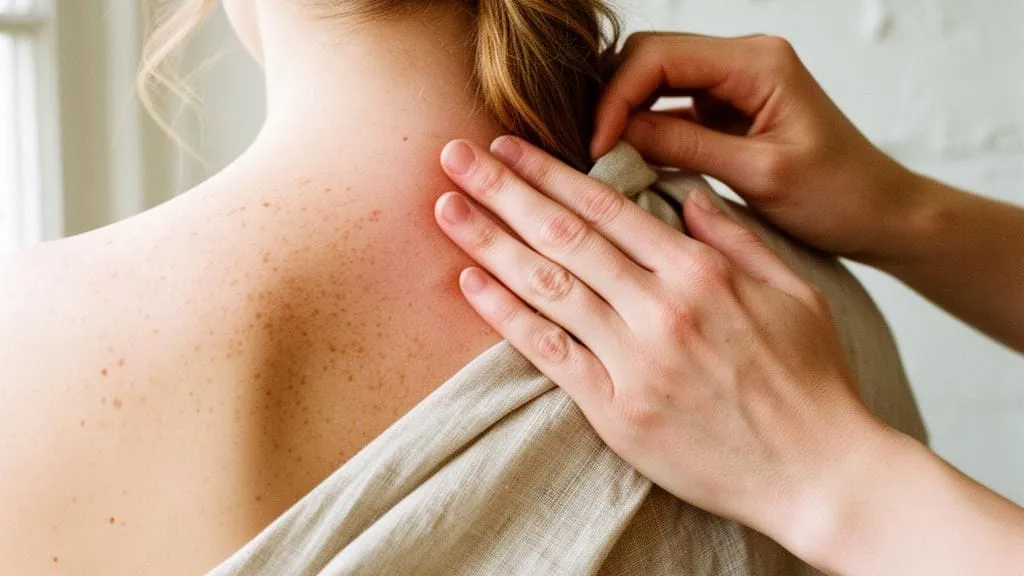
A therapist's hands at the base of a guest's neck, drawing a linen drape clear of the shoulder before working the muscle along it

The short answer

Massage for stress and sleep means using a hands-on session to lower everyday tension, in the hope that sleep comes more easily afterwards.

Research support is modest and short-term, and some of the trials that measure sleep report no difference at all.

At Crystal Massage in Wichita, Kansas, body massage runs 30, 60, 90 or 120 minutes.

30 to 120 minutes, 7 days a week, 4 sources, 0 promises

Written by the Crystal Massage team in Wichita, Kansas, from what guests actually ask at the desk. This is general wellness education, not medical advice.

The honest summary

What the research on massage for stress supports, and where it quietly runs out.

Here's the claim that survives scrutiny. Massage may help with relaxation and everyday muscle tension, and people generally report feeling calmer for a while afterwards. The claim ends there. Everything past it — cortisol curves flattened, nervous systems reset, sleep architecture redrawn — rests on a small study repeated until it sounds settled, or on marketing copy in a lab coat.

NCCIH hedges its language, and you can see why. Its overview of the complementary approaches studied for stress is a long list of things people try and a much shorter list of things anyone can say worked. The studies tend to be small, you know perfectly well you're getting a massage, and follow-up is usually a measurement taken the same day, not a month later.

None of that makes an hour on the table worthless. It just makes the honest sentence a small one. Walk in with your shoulders around your ears and you'll usually walk out with them lower. Whether you sleep better on Thursday is a different question, and the next chapter is about how thin the answer to it is.
The sleep question

Sleep is the weakest link in the case for massage, and saying so out loud is the point.

Sleep is where the marketing gets loudest and the evidence gets quietest. NCCIH's survey of complementary approaches for sleep problems runs through what has been tried, and the verdict keeps coming back the same: trials are small, short and inconsistent enough that confidence stays low. Some of the studies that measured sleep found no difference at all between the treated group and the comparison group.

A null result isn't proof that a therapy does nothing. It's a limit on what anyone can claim from the data, and you should have it before you spend money on the hope. Trials that come out well get quoted everywhere; the flat ones tend to stay in a drawer. An hour on a table does not fix insomnia.

Collecting good sleep evidence is hard, which is part of why there is so little of it. You can't blind anyone to whether they got a massage, most trials ask people about their sleep instead of recording it, and follow-up usually ends long before a habit would have had time to show itself. That doesn't mean you should distrust the studies. It means nobody should quote them as settled — and one number lifted out of one trial is exactly that.

Ask a narrower question, though, and you get a better answer. Falling asleep more easily on the night of a session is plausible, and plenty of guests tell us exactly that. It's one night, uncontrolled, reported by the person who paid for it — worth something, just not much.

Three different questions, all asked as: does massage help me sleep?
The question actually being askedWhat gets measuredHow solid the answer is
Will I sleep better tonight? One night, after one session, self-reported Plausible and commonly reported — but uncontrolled, and one night long
Will my sleep be better in a month? Sleep quality over weeks, usually on a questionnaire Weak. Small trials, short follow-up, findings that disagree with each other
Will this deal with a diagnosed sleep disorder? Insomnia, sleep apnoea, restless legs No. It belongs to a clinician, and delay is the real risk
An hour on a table won't fix insomnia. Falling asleep more easily tonight is a smaller, likelier, much more ordinary thing.

Why evenings

The strongest argument for a late appointment has nothing to do with biology.

Nobody has shown that a massage at 8 PM does more for sleep than the same massage at 11 AM. If a trial like that exists, we haven't seen it, and we're not going to invent one. The real case for an evening slot is duller: it's the hour you were going to spend on a screen anyway.

We're open seven days a week — 9:30 AM to 9 PM Monday through Thursday, and to 9:30 PM Friday, Saturday and Sunday. The late-hours page carries the day-by-day detail, plus how late each length can still start. The short version: no night of the week rules an evening session out.

An appointment that lands after work earns its place twice over. It takes an hour out of the stretch of evening you'd otherwise spend scrolling and calling it winding down, and it moves the handover between work and sleep off the sofa. Neither is a mechanism anyone has demonstrated. Both are why people tell us the evening version works for them.

What a late appointment actually buys

A boundary. Your working day ends when you leave for the appointment, not when you finally run out of energy. If your evenings tend to dissolve into a phone, that's most of what you're buying.

What it does not buy

A guaranteed night. Sleep answers to caffeine, alcohol, light, a hot bedroom and a long list of other things, and one appointment doesn't outrank that list. If your sleep has been broken for weeks, that's a question for a clinician.

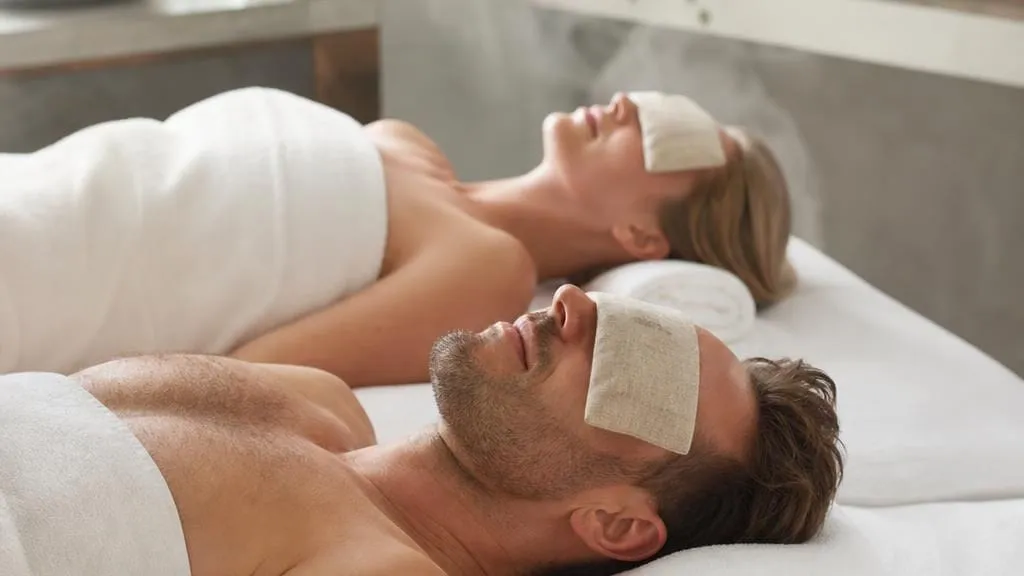
Two guests lying still on side-by-side tables with warm cloths covering their eyes
Covering the eyes does more of the work than it looks like it should: the room goes dark, your phone is somewhere else, and nothing in the next 60 minutes is asking for a reply.

What to ask for

When the week is the problem, the session you want is not the hardest one available.

Slow, broad, predictable work gives your nervous system nothing to brace against. Sharp work gives it something to react to. Both have their uses, and only one of them is what you mean when you say you need a massage because of the week you've had.

Swedish is the usual name for the slower version. It's painted on our storefront window and named in our own welcome note, but it isn't a separate line on the price list — it's what you ask for when you book an hour of body massage. Think of it as a way the hour gets worked, not a different product with its own number. Deep tissue is the opposite request, and it costs the same at every length we sell both in.

Say the rest out loud instead of enduring it. Pressure, conversation, which areas to leave alone, whether the room is too cold — all of it is adjustable mid-session, and telling us is information, not a complaint. The hour is yours to steer.

  • Say what the hour is for. Not sore, just fried is a more useful brief than any menu choice.
  • Name the pressure, then name it again. What felt right in the first ten minutes is often not what you want in the last ten.
  • Ask for quiet if you want quiet. Silence is a normal request and nobody takes it personally.
  • Mention a health condition, a recent injury or a pregnancy when you call. The phone is the right place for that, not the table, and it can change how the hour gets worked.
  • Call ahead — don't just turn up hopeful. (316) 246-3999 reaches the front desk directly.

Where it stops

Two claims this page will not make, and the reason it will not.

Mayo Clinic Health System's discussion of massage in the context of stress, anxiety and depression puts the service where it belongs — something that may ease how you feel alongside your care, never the care itself. That distinction sounds pedantic right up until someone puts off a doctor's appointment because a spa page implied they'd already handled it.

So neither of the two claims below will ever appear here, even though both of them would sell more hours than anything else on this page.

Massage does not release toxins

Nothing that happens on a massage table releases toxins, and no session moves anything out of anything. The idea has been repeated often enough that it sounds like biology. It isn't. Drink water afterwards if you like — the reason is an hour lying still in a warm room, not a cleanse.

It is not a substitute for medical care

Persistent pain, sleep broken for weeks, low mood that won't lift, a recent injury, a pregnancy — every one of those is a conversation with a clinician first, and we'd tell you the same thing on the phone. Nothing on this menu diagnoses a condition, and nothing on it is a treatment for one.

The frequency question

How often is a budget question long before it becomes a physiology question.

Nobody has established a schedule for using massage against stress. Mayo Clinic Press on massage therapy and mental health treats it as one supportive practice among several rather than as a dose with an interval. Nobody has shown that fortnightly beats monthly, or that weekly beats either.

So pick a cadence you can hold for three months without resenting it. A session you actually keep is worth more to you than a schedule you abandon in week five, which makes this a calendar problem long before it's a physiology one. The guide on how often to come back takes the arithmetic further.

There's a second dial most people never touch. The menu runs from half an hour to two hours, so a cadence is really two decisions — how often, and how long each time. Against a bad month, a monthly hour and a fortnightly half hour are not the same purchase: one is a reset with room in it, the other is a standing appointment with your own shoulders. No trial has compared them, so the tiebreaker is whichever one you'll still be booking once the novelty has worn off.

  • Once, to find out. A single session tells you whether you're the kind of person this works on. Plenty of people aren't.
  • Monthly, as maintenance. The cadence most people settle into, largely because it survives contact with a calendar.
  • Weekly, for a stretch. Reasonable through a genuinely bad month, and a poor thing to commit to for a year.
  • No cadence at all. Booking when the week has actually earned it is a perfectly good answer.

Booking one

From a hedged answer to an actual hour, by telephone.

You pay for the time, not the technique, which keeps this part short. Half an hour of body massage is $50 — enough for the back, neck and shoulders. Most first visits take the full hour at $70 instead. And if you only want to find out whether any of this lands for you, half an hour of foot work — reclined, shoes off, clothes on — costs $25. Every other length and service sits on the price page.

Two guests, two therapists and one room works on the same principle, and the couples page shows why the two-guest price is exactly double the one-guest price. New to all of this? What actually happens at a first appointment walks you through the door, the intake and the table, in order.

There is no form on this site and no booking widget. Calling is the whole of it — (316) 246-3999 reaches the front desk, and any question this page hedged its way around takes a minute to put to a person. Once you're done reading about the research, the citywide page is where to go next.

At a glance

The numbers.

What the evidence supports
Relaxation and everyday muscle tension — 1 session at a time, no long-term claim
Where the evidence is weakest
Sleep — some trials that measure it report 0 difference from the comparison group
Body massage lengths
30, 60, 90 or 120 minutes
The gentler entry point
Foot work, 30 or 60 minutes, reclined in a chair with shoes off and clothes on
Days open
7 — there is no day of the week the studio closes
Sources cited on this page
4 — 2 from NCCIH, 2 from Mayo Clinic
What it is not
Not medical care — 0 conditions are diagnosed here and nothing is prescribed
Address and phone
8338 E 21st St, Suite #311, Wichita, KS 67206 — (316) 246-3999

Who books it

Best for.

  • Anyone whose week is the problem, not a specific injury — slow, broad work over an hour is the version of this with the most support behind it, thin as that support is.
  • People who want the honest answer about sleep before they spend money, including the part where some trials found nothing at all.
  • Anyone who'd sooner take the last appointment of the evening than the first of the morning — the late-hours page has the detail for every day of the week.
  • Two people who both had the week — the couples room is one room with two tables, and two guests pay exactly double what one guest pays, not a dollar over.
  • First-timers testing whether any of this works on them, for whom half an hour of foot work is the smallest honest experiment on the menu.

Worth knowing before you book

Say what you want out loud at the start — pressure, quiet, areas to leave alone. All three are adjustable mid-session, and your therapist would far rather hear it at minute ten than read it afterwards.

Mention a health condition, a recent injury or a pregnancy at the desk, before you're face down on the table. It changes how the hour gets worked, and anything the front desk needs to check is easier to check before a time is held.

Calling ahead is how a time gets held — (316) 246-3999 reaches the front desk. If the evening is the part that matters to you, name that first.

Evidence-aware

Sources, and what they do not say.

Massage may help with relaxation and everyday muscle tension, and none of it replaces medical care. The references below are the plain-language health guidance this guide leans on. Where the evidence is thin or a review found nothing, they say so — and so does this page, in the same paragraph as the finding rather than in a footnote.

FAQ

Still wondering.

Does massage actually help you sleep?

+

Honestly, the evidence is thin. Surveys of complementary approaches for sleep describe the trials as small, short and inconsistent, and some studies that measured sleep found no difference at all. Falling asleep more easily on the night of a session is commonly reported and plausible; a lasting change in sleep quality is not something the research currently supports. Massage may help with relaxation and everyday muscle tension, and that's the claim we stand behind.

Is an evening massage better than a morning one for stress or sleep?

+

No study establishes that. The practical argument is stronger than the physiological one: an evening appointment takes an hour out of the part of the day most people spend on a screen, and it moves the handover between work and sleep somewhere other than a sofa. Crystal Massage is open seven days a week and the doors stay open into the evening on every one of them, so it's a scheduling choice, not a biological one.

Which kind of massage is best for stress?

+

Usually the slower, broader kind — not the deepest one available. Swedish is the common name for it. It's painted on our storefront window and named in our own welcome note, but it isn't a separate line on the price list, so it's what you ask for when you book an hour of body massage. Deep tissue is the opposite request and costs the same as regular body massage at every length we sell both in. Say which you want when you call, and say it again on the table if it turns out to be the other one.

Can massage replace care for anxiety, depression or insomnia?

+

No. Massage is a wellness service, not care for a diagnosed condition, and no session here diagnoses anything. Mayo Clinic writes about massage as something that may ease symptoms alongside proper care, which is the correct place for it. If sleep has been broken for weeks, if low mood isn't lifting, or if pain is persistent, that conversation belongs with a clinician, and booking a massage is a poor reason to put it off.

Do I need an appointment?

+

Calling ahead is the reliable way to get the time you want, and it is the only way to hold the couples room, which is one room with two tables. There is no online booking — (316) 246-3999 reaches the front desk directly. Crystal Massage is open seven days: 9:30 AM to 9 PM Monday through Thursday, and to 9:30 PM Friday, Saturday and Sunday.

Is massage a replacement for medical care?

+

No. Massage may help with relaxation and everyday muscle tension, but it neither diagnoses nor treats a medical condition. If you have a health condition, a recent injury, severe or persistent pain, or you are pregnant, check with a medical professional first and tell your therapist before the session starts.

Where do I park?

+

Crystal Massage is in The Shops at Tallgrass at 8338 E 21st St, Suite #311, Wichita, KS 67206, on the north side of 21st Street just east of Rock Road. Parking is the plaza's own surface lot, free, straight in off 21st, and Suite 311 opens onto it — no garage, no deck and nothing to validate.

Read enough? The table is on 21st Street, just east of Rock.

Open seven days — Mon — Thu 9:30 AM — 9:00 PM · Fri — Sun 9:30 AM — 9:30 PM. Say the length you want when you call and the desk will tell you what is free.

Crystal Massage · 8338 E 21st St, Suite #311, Wichita, KS 67206 · Open seven days · (316) 246-3999

Crystal Massage, Wichita, Kansas Page last updated Prices, hours and distances on this page are rebuilt from source on every deploy.