

1. Home
  2. Guides
  3. How Often to Get a Massage

Massage frequency

How often should you get a massage? The interval follows the reason.

No single interval fits everybody, and the once-a-month answer you keep meeting is a billing convention, not a research finding.

Massage frequency means the gap you can actually keep, and it's set by the reason you booked in the first place.

A neck that seizes up every Thursday wants one rhythm.

A rough month wants another.

Our menu runs 30, 60, 90 and 120 minutes.

Open
Mon — Thu 9:30 AM — 9:00 PM · Fri — Sun 9:30 AM — 9:30 PM
Address
8338 E 21st St, Suite #311, Wichita, KS 67206
Parking
Free surface parking in the plaza lot, right outside the door.
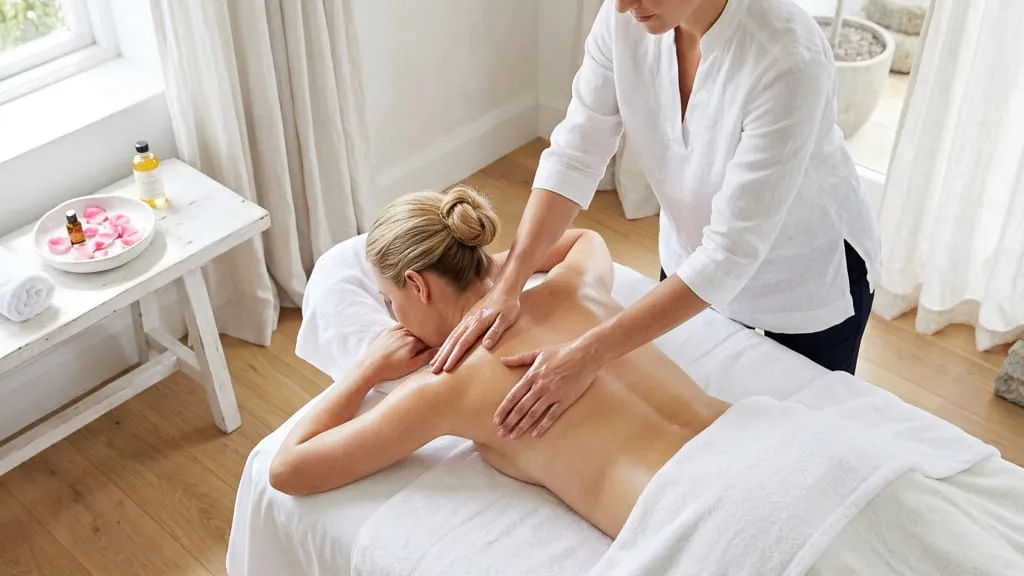
A therapist's hands laid flat either side of the spine, pressing slowly down the length of a guest's back

The short answer

How often you should get a massage depends on why you're booking one: a specific complaint usually starts close together and spaces out, while general stress work runs at whatever gap holds.

Evidence for repeating a massage is thin, short-term and low in confidence.

Crystal Massage in Wichita sells 30, 60, 90 and 120 minutes, seven days a week.

4 body lengths, 30 to 120 minutes, open 7 days a week

Written by the Crystal Massage team in Wichita, Kansas, from what guests actually ask at the desk. This is general wellness education, not medical advice.

The default answer

Once a month is a billing cycle, not a finding.

Ask the internet how often to book and one number comes back: monthly. It's a tidy answer, and it usually has the shape of a recurring charge — every four weeks, a slot somebody would like kept full. That doesn't make it wrong. It does mean the number came out of accounting, not a trial.

The research is messier. NCCIH's plain-language overview of massage therapy is careful about what the evidence will carry: studies that are often small or low in quality, and benefits reported over weeks, not years. None of that gives you an interval.

So start one step earlier, with the question people skip. Why are you booking? A shoulder that's hurt since March and a Friday you'd like to survive are different problems, and they don't want the same calendar. Get that part right and the interval mostly falls out of it.
Start from why

How often you should get a massage follows the reason you booked.

Sort the reasons and the intervals sort themselves. Almost everyone who calls has one reason off a short list: something specific that keeps coming back, a general load of stress and thin sleep, a body being asked to do more than usual, or an occasion. Each one wants a different gap, and only one of them wants a rhythm you build on purpose.

Treat the table below as a starting point. No trial produced it — it comes from what people ask us at the desk, plus the plain logic that a problem arriving on a schedule can be met on one. You're allowed to revise it after two visits.

The gap is a variable, not a subscription

Whatever you start with is a guess. Book it, notice how long the effect holds, then move the next appointment — earlier if it faded by day three, later if you'd half forgotten why you came. Two sessions usually tell you enough. Three is plenty.

One reason not to build a rhythm at all

Plenty of people book once a year and get exactly what they came for. A single 60-minute session is a complete purchase, and it doesn't count for more because a second one follows. If the real reason you're booking is curiosity, once is the right number.

Four reasons people book, and a starting gap for each — none of it is a research finding
Why you bookedA reasonable starting gapWhat tells you to change it
A specific complaint that keeps returning Every week or two for the first two or three visits How many days the relief lasts; stretch the gap once it outlives it
General stress and poor sleep Whatever gap you will still be keeping in three months Whether you are cancelling — a gap you skip is too short
Training, physical work, a heavy week Around the load, not around the calendar Soreness that arrives before the next session instead of after it
An occasion, a present, or plain curiosity Once, with no plan attached Nothing. A single session is a complete answer
Not one of the four sources below names an interval, and that silence is the honest answer.

The evidence

What the research can say about repeating it, and where it stops short.

Massage has been studied a lot for pain, and the summaries agree in an uncomfortable way. NCCIH's review of complementary approaches for chronic pain sorts what the evidence supports from what it doesn't. Massage sits in there among the approaches with some support — heavily qualified, and mostly over the short term.

You keep meeting the phrase short term. It qualifies the low-back findings, it sits on the chronic-pain summary, and none of the four sources drops it. It marks out a window: the benefits these reviews describe were measured in the weeks after a course of sessions, and what's left months later they simply don't report.

The trials that found nothing belong here too. Some studies in this area report no difference between massage and whatever they were compared against, and those results are part of the record. Hold a schedule built on the positive ones loosely.

Nothing cited here prescribes a frequency

Read all four sources at the foot of this page and you won't find an interval in any of them. No number of weeks, no sessions per month, no dose. The silence is the answer. If somebody quotes you a frequency as though a study produced it, they're quoting something else.

Where the evidence is strongest, it is still modest

Low-back pain is the best-studied case, and even there the language is careful. You get relief in the weeks after a course of sessions, at low to moderate confidence, with no claim at all about what happens six months on. Massage may help with relaxation and everyday muscle tension. That is the whole claim, and none of it is a substitute for medical care.

A therapist working across the top of a guest's shoulder with a slow, even stroke
A slow, even pass across the top of the shoulder — the same stroke whether the gap since the last session was two weeks or two years.

A stubborn complaint

When one thing keeps hurting, start close together and then move apart.

If one thing keeps coming back on a schedule, that's the case where a rhythm is worth building on purpose. The usual shape is a short run close together — every week or two, two or three times — then a widening gap. NCCIH's page on low-back pain and complementary approaches is the closest thing to a template: relief described as short-term, evidence graded low to moderate, no promise that it lasts.

Don't judge it by how you feel walking out. Almost everyone feels good walking out. Count the days before the thing comes back, and let that number set your next booking. Four days means the gap is too long. Eleven days means you can stretch it.

There's a ceiling on this. If a complaint hasn't shifted after three or four sessions, booking more of them is the wrong lever — that one's a doctor's question. Massage neither diagnoses nor treats a medical condition, and a pattern that ignores a rhythm is the pattern worth having looked at.

  • Name the spot before the session, not after. A therapist working blind spends ten minutes finding what you already knew.
  • Keep talking about the pressure. Deep tissue costs the same here as a regular hour at every shared length — the deep tissue page has it.
  • Count the days, not the sessions. The gap that works lands just before the complaint returns.

Stress and sleep

For a general load, the right interval is the one you will actually keep.

Plenty of people book with nothing in particular wrong. Work is heavy, sleep is thin, and the shoulders live somewhere up near the ears. AMTA's position statement on massage, health and wellness frames it broadly — physical, mental and social well-being — and that breadth is honest, because none of the four sources narrows it.

Here, keeping it beats squeezing it in. A session every six weeks that you actually turn up for does more than a two-week plan you abandon in March. Pick a gap you can pay for and get to without rearranging your week, then leave it alone for three or four rounds before you judge it.

One more thing gets in the way, and it isn't your body. Booking is a small piece of admin you have to do while you're busy, so the intervals people stick to tend to be pinned to something that already repeats — the week after payday, the Sunday at the end of a shift pattern. A gap picked in the abstract lasts about as long as a resolution.

The cancellation test

If you've moved or cancelled two of your last three appointments, the interval is wrong for your life, not for your body. Lengthen it until you stop cancelling. A gap you keep tells you something; a gap you skip is a plan nobody is following.

Sleep is the one people ask about most

Does an hour on the table help you sleep? Fair question, and an open one. The stress and sleep guide goes through what has been studied and how thin it is. Some people say they sleep better that night; the research behind that is small, and none of this is a treatment for insomnia.

The arithmetic

A rhythm has to survive contact with a calendar.

Money decides this as much as your body does, and pretending otherwise is how people end up booking twice and never again. An hour of body massage is $70. Half an hour is $50, and half an hour in the foot chair is $25 — the lowest line on the menu, and the cheapest way to find out whether a shorter visit more often suits you better than a long one twice a year.

Compare two shapes. Six long sessions two months apart is one; a short session every three weeks is the other. Neither is better in the abstract, and the sums depend on which lengths you pick. The price page carries every figure if you want to do them.

Deciding yours

Pick a gap, then let the next two sessions correct it.

Book once and notice how long it holds. Move the next one closer or further out. That is the whole method, and it beats any number a stranger on the internet can hand you — including the ones in this guide.

The practical end of it: Crystal Massage is open seven days, 9:30 AM to 9:00 PM Monday through Thursday and to 9:30 PM Friday through Sunday, and the late-hours page works out how late a long session can start. Every booking goes through the phone — (316) 246-3999 reaches the front desk, and asking which length to start with is a shorter conversation than reading about it.

If your real question is which one, the main massage page lays out the whole menu, and the foot guide sorts the storefront word from the line you can actually book.

  • Once a year. A complete answer if you came out of curiosity.
  • Every few months. Where most people land for a general load.
  • Every week or two, briefly. For a specific complaint, then widen the gap.

At a glance

The numbers.

The short answer
1 interval per reason — a complaint tightens the gap, a stress habit holds it
What the research settles
None of the 4 sources cited here names a frequency
A recurring complaint
Every week or two for 2 or 3 visits, then a widening gap
A general load
Whichever gap you will still be keeping in 3 months
Session lengths on the table
30, 60, 90 or 120 minutes
Cheapest way to test a rhythm
30 minutes in the foot chair, the lowest line on the menu
How to hold a time
1 phone call — the front desk takes every booking
Address and phone
8338 E 21st St, Suite #311, Wichita, KS 67206 — (316) 246-3999

Who books it

Best for.

  • You've been told once a month, and you'd like to know where that number came from.
  • One thing keeps coming back — a neck, a low back — and you can't tell whether to book closer together or wait it out.
  • Deciding between a long session now and again and a short one on a regular gap.
  • You've set a rhythm before, cancelled half of it, and want a gap you'll actually keep.
  • You'd like the caveats printed next to the claims, including the trials that found nothing.

Worth knowing before you book

Tell us at the start how long the last session held. It's the most useful sentence a returning guest can give us, and it changes the work more than asking for firmer pressure does.

Change one thing at a time — the length or the gap, never both at once — or the next visit tells you nothing about which one mattered.

You don't have to decide anything before you call. Which length, which gap, and whether to start in the chair or on the table are all front-desk questions, and it takes about a minute to sort out.

Evidence-aware

Sources, and what they do not say.

FAQ

Still wondering.

How often should you get a massage?

+

It depends on why you're booking. For one recurring complaint, most people start every week or two for two or three sessions, then stretch the gap as the relief lasts longer. For general stress, the useful interval is the one you'll still be keeping in three months — many people land somewhere between three and six weeks, purely by preference. No published research names a best frequency.

Is once a month the right answer?

+

It's a reasonable place to start and a poor place to stop thinking. The monthly figure comes mostly from how studios bill and schedule, not from a trial. If a session is still doing something after five weeks, stretch it. If it has worn off after ten days and you booked for a specific complaint, come sooner.

Can you have a massage too often?

+

There's no established maximum for a healthy adult, and no research saying where a ceiling would sit. In practice, soreness the day after a firm session is common and should settle within a day or two; if it happens every time, change the pressure, not the calendar. If a health condition or a recent injury is part of the picture, that ceiling is a question for a medical professional and not for a schedule — massage may help with relaxation and everyday muscle tension, and it is not a substitute for medical care.

Does going more often make the benefit last longer?

+

That hasn't been shown clearly. The reviews reporting a benefit from massage generally measure it over weeks, not months, and several trials find no difference between massage and whatever they were compared against. Going more often may keep you inside that short window more of the time; it doesn't make the window itself any longer, and none of the sources below claim it does.

Do I need an appointment?

+

Calling ahead is the reliable way to get the time you want, and it is the only way to hold the couples room, which is one room with two tables. There is no online booking — (316) 246-3999 reaches the front desk directly. Crystal Massage is open seven days: 9:30 AM to 9 PM Monday through Thursday, and to 9:30 PM Friday, Saturday and Sunday.

Is massage a replacement for medical care?

+

No. Massage may help with relaxation and everyday muscle tension, but it neither diagnoses nor treats a medical condition. If you have a health condition, a recent injury, severe or persistent pain, or you are pregnant, check with a medical professional first and tell your therapist before the session starts.

Where do I park?

+

Crystal Massage is in The Shops at Tallgrass at 8338 E 21st St, Suite #311, Wichita, KS 67206, on the north side of 21st Street just east of Rock Road. Parking is the plaza's own surface lot, free, straight in off 21st, and Suite 311 opens onto it — no garage, no deck and nothing to validate.

Read enough? The table is on 21st Street, just east of Rock.

Open seven days — Mon — Thu 9:30 AM — 9:00 PM · Fri — Sun 9:30 AM — 9:30 PM. Say the length you want when you call and the desk will tell you what is free.

Crystal Massage · 8338 E 21st St, Suite #311, Wichita, KS 67206 · Open seven days · (316) 246-3999

Crystal Massage, Wichita, Kansas Page last updated Prices, hours and distances on this page are rebuilt from source on every deploy.